Stickman Hook
- 4.2
- Rating
- 100.00M
- Installs
- Free
- Price
 Analysis by App-foxy
I first picked up Stickman Hook expecting a quick arcade distraction, and that is exactly where it works best. You guide a stick figure through compact obstacle courses by attaching to hooks, swinging through the air, and releasing at the right moment. The idea is easy to understand within seconds, but the timing becomes surprisingly demanding once the courses start asking for cleaner angles and faster decisions.
Madbox has built this as a free arcade game for Everyone, so it is approachable for younger players and casual users who do not want a complicated control scheme. It is also a game I can open for a short break without needing to remember a long story, manage a large inventory, or learn several systems before having fun. That simplicity is its strongest quality, although it also explains why players looking for a deep, long-form game may eventually want something more substantial.
How the current game feels to play
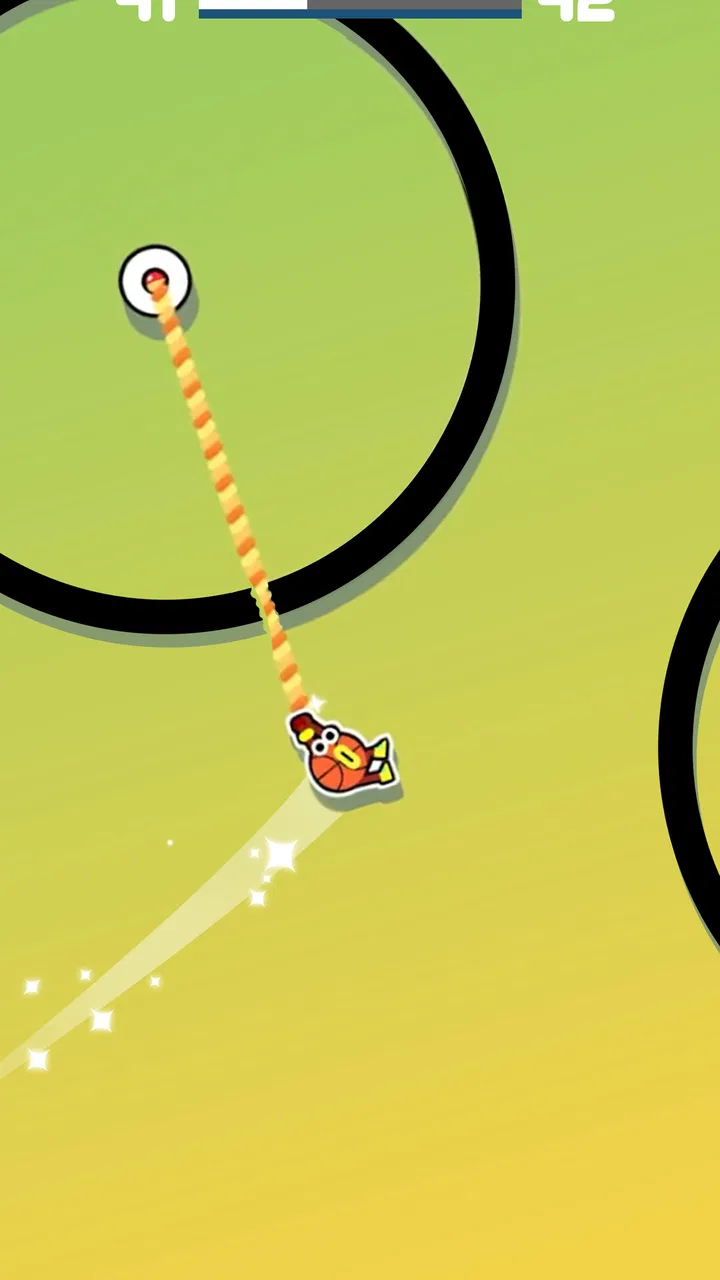
The central action is built around one important question: when should I attach, and when should I let go? Tapping makes the character connect to a nearby hook, creating a swinging arc. Releasing sends the character forward, and the next hook has to be reached before momentum disappears. The controls are deliberately small in number, but the result is not mindless. A tiny mistake in release timing can turn a smooth run into a collision or a fall.
You May Also Like

 Blood Strike: 2.5 Anniversary
Blood Strike’s Loadouts Turn Every Drop Into a Tactical Gamble
A close look at Blood Strike’s custom loadouts: how fast access to signature weapons reshapes its battle royale rhythm, rewards preparation, and narrows the gap between fights.

 Pandora - Music & Podcasts
Pandora’s Music Is Easy to Start, but Harder to Recover
Pandora’s strength is its low-effort path from a seed to a station. Its weak spot is how much confidence it asks you to place in connection, setup, and quiet recovery.

 8 Ball Pool
 Is Built on Rivalries, Rematches, and Routine
A close look at the rivalries, rematches, shared routines, and unanswered safety questions that turn a quick pool match into a persistent mobile community.

 Samsung Music
’s Quiet Strength Is Playing What You Already Own
Its reach comes less from spectacle than from dependable access to a personal library. That simplicity is both the app’s strongest retention engine and its ceiling.

 AccuWeather: Weather Radar
AccuWeather Review: A Quick, Clear Forecast for Everyday Decisions
For everyday plans, the best forecast is the one you can understand quickly. AccuWeather makes rain timing, radar, and local conditions easy to act on, with a few trade-offs.

 Hill Climb Racing
Why Hill Climb Racing Still Turns Crashes Into One More Run
A tiny car, a bumpy hill and one more upgrade: Hill Climb Racing keeps resurfacing because its simple chaos makes every near-miss feel personal.
More From Our News Desk
View All News


That control design gives the game a pleasant “one more attempt” rhythm. I can fail quickly, understand what went wrong, and try again without sitting through a long penalty. The best moments come when several swings connect naturally: the character gains speed, clears an obstacle, and lands in a way that feels earned rather than random. It is a good example of an arcade game using a simple input to create room for practice.
The early experience is friendly enough for someone who rarely plays games. You do not need to memorize complicated combinations or study a map. Instead, the game teaches through movement. A player learns that a hook placed high can create a longer arc, that releasing too early wastes momentum, and that an apparently safe route may leave too little room for the next attachment. Those lessons become more valuable than any written tutorial because they are learned through direct feedback.
I found the game particularly comfortable during short waiting periods. If I have a few minutes before an appointment, I can play a handful of attempts and stop without feeling that I abandoned a major objective. It also suits people who enjoy improving a physical skill. The satisfaction is less about collecting a complicated reward and more about making a section that previously felt awkward suddenly look effortless.
Why the swinging system stays interesting
The hook mechanic has more depth than its cheerful presentation suggests. A swing is not merely a way to move from one fixed point to another. The height, direction, and release moment all affect the next section. I often found myself watching the character’s position relative to the next hook instead of tapping automatically. That small adjustment in attention is what separates a lucky pass from a repeatable one.
One useful habit is to think one hook ahead. Beginners tend to focus only on the hook they are currently attached to, but the better decision is often determined by the following landing area. Releasing at the visually obvious moment may send the character toward a poor angle. Waiting a fraction longer can produce a more useful trajectory, provided there is enough space. This is a practical tip that makes the game feel less chaotic without making it easier than it should be.
Another detail I appreciate is that failure can be informative. When a run goes wrong, I can usually identify whether I released too soon, approached a hook from the wrong side, or entered a narrow section without enough control. That makes repeated attempts feel like practice rather than pure repetition. Still, the game does not offer the kind of detailed analysis found in a dedicated training title, so players who want precise performance breakdowns may find the feedback limited.
The visual style supports this immediate readability. The stickman character and bright arcade presentation keep the important objects easy to recognize while moving quickly. That matters because hesitation is costly. I do not want a crowded screen to hide the next hook or make the character’s position unclear. The presentation is not trying to be realistic, and I think that is the right choice for this type of game.
What has changed over time
The game was released on November 2, 2018, and the current Android version is 9.9.13. That version number suggests a product that has continued to receive attention rather than remaining frozen after launch. I see that as useful context for anyone comparing it with a short-lived arcade experiment: this is an established title with a substantial audience, not a brand-new release still proving its basic idea.
Its reach is reflected in more than 100 million installs, while the average score sits at 4.1 from around 557 thousand ratings. Those figures do not guarantee that every player will enjoy the pacing, but they do show that the core loop has connected with a broad audience. I would interpret the rating as a sign of strong general appeal with some understandable friction, especially for people sensitive to repetition, interruptions, or in-app purchases.
The developer, Madbox, has kept the identity focused on quick arcade movement rather than turning the game into a complicated platform adventure. That continuity is important. The appeal comes from starting a run almost immediately, not from navigating menus for several minutes. For existing users, a current version can be reassuring because the game remains recognizable: the reason to return is still the satisfying relationship between swinging, releasing, and correcting mistakes.
New players should use the version information in a practical way. On Android, the game requires at least Android 8.0, so older devices may not be suitable even though the gameplay itself looks lightweight. A compatible phone should still be judged by how comfortable its screen and touch response feel, because the game depends on quick, accurate taps. A technically supported device is not automatically the best device for precise play.
How existing players may experience the evolution
For someone who played it years ago, the biggest benefit of returning is likely familiarity rather than a completely different genre. The controls remain easy to pick up, so there is little relearning. That makes it a convenient return game: I can come back after a long break and understand the basic action almost immediately. The downside is that familiar simplicity may feel less exciting if I am hoping for a major new layer of strategy.
Long-term players may also notice that arcade games built around short attempts can become dependent on personal goals. One person may be happy simply reaching the end of a course, while another wants cleaner movement and fewer mistakes. I recommend deciding which kind of progress you want before judging the game. If you need a clear story conclusion or a large character-development system, the hook mechanic alone may not provide enough variety. If you enjoy refining timing, it can remain engaging for much longer.
The free entry point makes it easy to test without committing money. However, the game includes in-app purchases ranging from $0.99 to $20.99 per item. I would approach those purchases carefully and treat them as optional spending rather than part of the basic reason to install the game. The important question is whether the free experience already gives you enough enjoyment. If it does, there is no need to buy anything immediately; play first and decide later whether an extra purchase genuinely improves your experience.
This is also where the game may feel different from premium arcade alternatives. A paid title often gives a cleaner, more self-contained experience from the start, while a free game is easier to try but may include more pressure around optional spending or interruptions. Stickman Hook is the better choice when I want zero-cost access and quick experimentation. A paid alternative may be better when I value a calmer session and want to avoid the general friction associated with free-to-play design.
Everyday situations where it fits
Imagine I am on a train with a short journey ahead. I do not want to begin a role-playing game because I may need to put my phone away at any moment. This game fits the situation: I can start an attempt, focus on the next hook, and stop after a failure or successful finish. The same applies to a lunch break, a queue, or a few minutes before bed, although the repeated “just one more try” loop can make a short session last longer than planned.
It can also work as a gentle introduction to mobile gaming. Someone who feels overwhelmed by virtual buttons may find the tap-based movement much less intimidating. I would recommend it to a friend who likes visual challenges but does not want to learn a large ruleset. It is especially suitable for players who enjoy rhythm-like timing, even though the objective is movement rather than following music.
On the other hand, I would not choose it for a group looking for a shared multiplayer activity, a narrative experience, or a long strategic campaign. Its strength is the individual attempt. It asks me to improve my own timing, not to coordinate with teammates or make broad planning decisions. Players who need constant novelty may also lose interest once the basic swing-and-release pattern becomes familiar.
Small techniques that make a real difference
My first practical suggestion is to stop tapping reactively. Instead of waiting until the character appears to be in trouble, I try to anticipate the next attachment and decide whether the current swing is setting up a useful approach. This reduces frantic corrections. It does not eliminate mistakes, but it turns the game from a sequence of surprises into a series of deliberate choices.
Second, I treat the release as the main skill rather than the hook attachment. Attaching is usually the easy part; releasing determines the quality of the next movement. If I release while the character is traveling in an unhelpful direction, the next hook may be technically reachable but practically awkward. Watching the arc for a moment longer often produces a cleaner line than tapping at the first opportunity.
Third, I use short practice sessions when my attention is poor. Because attempts are brief, it is tempting to keep playing while distracted, but that can create the impression that a section is unfair when the real issue is rushed input. Taking a break and returning with a calmer focus can be more effective than repeating the same mistake many times. This is especially useful for younger players, who may benefit from treating the game as a timing exercise rather than a test of patience.
There is also a useful trade-off between speed and control. Fast movement feels exciting, but maximum momentum is not always the safest choice. A slightly slower approach can give more time to recognize the next hook and choose a better release. I would not chase speed on every attempt. First I would aim for a repeatable route, then gradually make the movement sharper once the sequence feels familiar.
Where the game still falls short
The same focus that makes the game accessible can eventually make it feel narrow. The hook mechanic is polished enough to support repeated practice, but it is still one central idea. If I am not personally motivated by improving timing, the available variety may not compensate for the repetition. This is not a flaw in execution so much as a limit of the format.
Free access is another mixed point. The price is zero, which is excellent for trying the game, but optional purchases between $0.99 and $20.99 mean that the overall experience is not identical to a traditional one-time purchase. I would be more cautious about handing it to a child without discussing spending first. The Everyone age rating describes broad suitability, but it does not replace sensible supervision around purchases.
The game is also less suitable for players who want a predictable pace. Some people enjoy relaxing mobile games where progress is slow and forgiving. Stickman Hook can be cheerful, but its timing demands attention, and repeated misses can become irritating when I am tired. In those moments, a turn-based puzzle game or a slower platformer would probably be a better fit.
Another limitation is that the game’s value depends heavily on the quality of the moment-to-moment feel. If touch input is inconsistent, the experience becomes frustrating quickly because a tiny delay can change the outcome. I would test it on the device I plan to use rather than assuming that a compatible operating system guarantees perfect comfort. A larger screen may make visual positioning easier, while a cramped display could make precise timing less pleasant.
What I would watch before recommending it
For new users, I would watch how quickly the game moves from novelty to routine. If the first sessions make you curious about improving each swing, that interest is a good sign. If you already feel that every attempt looks the same, the game may not grow on you. The important test is not whether you can finish the opening section, but whether you enjoy learning from a failed release and trying again.
For returning users, I would pay attention to how the current version behaves on your device and whether the established control style still suits you. The game has evolved into a mature arcade title, but maturity does not mean it will satisfy every expectation for new content or deeper systems. I would return for the familiar movement, not because I expect it to become a completely different type of game.
I would also keep an eye on spending habits. Since the game is free to install and includes optional purchases, it is easy to begin casually and make decisions later while caught up in the attempt loop. My approach is simple: play without buying first, decide what problem a purchase would solve, and avoid spending merely because a run went badly. No purchase can replace learning when to release.
Overall, I think Stickman Hook is a strong recommendation for short, skill-based arcade sessions. Its best quality is the way a tiny control vocabulary creates satisfying movement, and its biggest weakness is that the same focused design may not offer enough breadth for everyone. With a 4.1 average and a large audience of over 100 million installs, it has clearly found a durable place among mobile arcade games, but popularity should not hide the personal question: do you enjoy practicing timing?
I would install it if I wanted a free game that starts quickly, works well in small bursts, and rewards attention more than complicated planning. I would skip it if I needed a story, multiplayer teamwork, or a completely interruption-free premium experience. For the right player, the simple act of catching a hook, building momentum, and releasing at exactly the right instant is enough to make a spare minute feel surprisingly satisfying.
FAQs for Stickman Hook
01What is the main objective of Stickman Hook?
Stickman Hook is a physics-based platformer where the main goal is to swing through levels using a rope, much like Spider-Man, to reach the finish line. The game challenges players to navigate through various obstacles, using momentum and precise timing to avoid falling and complete each level successfully.
02Is Stickman Hook free to play?
Yes, Stickman Hook is free to download and play on both Android and iOS platforms. However, it offers in-app purchases and ads. Players can choose to purchase additional features or an ad-free experience, but the core gameplay is accessible without any cost.
03What are the system requirements for Stickman Hook?
Stickman Hook is designed to run smoothly on most modern smartphones and tablets. For Android users, it's recommended to have at least Android 4.4, while iOS users should have iOS 9.0 or later. The game is optimized for performance, ensuring a seamless experience on compatible devices.
04Can I play Stickman Hook offline?
Yes, Stickman Hook can be played offline, making it a great option for on-the-go entertainment without needing a constant internet connection. However, some features like ad removal or in-app purchases require an internet connection to process transactions and updates.
05Does Stickman Hook have multiplayer features?
Stickman Hook is primarily a single-player game focused on individual skill and timing. It does not have multiplayer features, but players can compete for high scores and compare their progress with friends through social media integrations and leaderboards, fostering a sense of community competition.
Pros
- Engaging and simple controls.
- Vibrant and colorful graphics.
- Quick and fun gameplay sessions.
- Challenging levels increase progressively.
- Offline play available.
Cons
- Can become repetitive over time.
- Limited variety in level design.
- Ads can be intrusive.
- No multiplayer mode.
- In-app purchases for ad removal.

Stickman Hook
Gallery